
A FARMACIST’S PRESCRIPTION~HOME SWEET HOME FOR ALL INVOLVED, ESPECIALLY THE PIGS
The Finale~Fifth in a Series
What a trip! What a contrast from Scott Willams/Stan Copeland pig hauling trips of the past! If you don’t believe me read this April Substack account. You may laugh as we can now, but at the time it wasn’t at all humorous.

https://stancopeland.substack.com/p/smokehouse-spirituality-when-everything
Every trip with loaded animals is not the same, and anyone who has hauled livestock for very long knows that a smooth trip is a gift, not an entitlement. Some journeys remind you how quickly things can go wrong, and those difficult journeys teach you to appreciate the ones in which the animals arrive safe, the trailer holds together, the weather cooperates, and everybody gets to the other end a little tired but grateful and thankful for answered prayers.
This trip to Santa Ynez, California, by way of Pagosa Springs, Colorado, was one of those good trips. We traveled more than 3,000 miles, pulling a trailer for most of the way with Stillwater Farm Iberico pigs in the back, and while the distance was more than three times what I had originally imagined when we began this little adventure, the journey was remarkably uneventful. Sometimes the blessing is not found in getting somewhere quickly but in getting there without having to solve a problem you never expected to have.
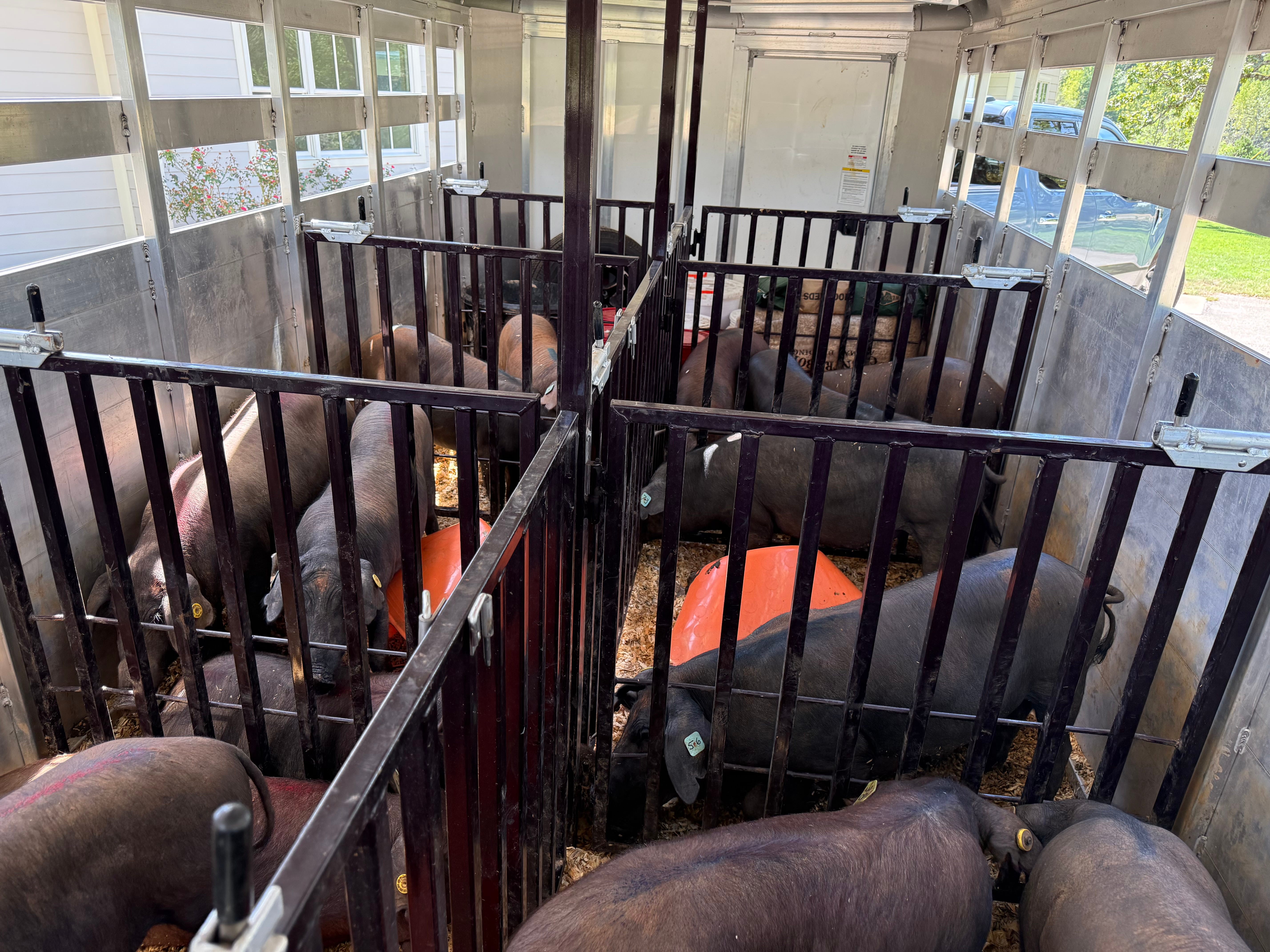
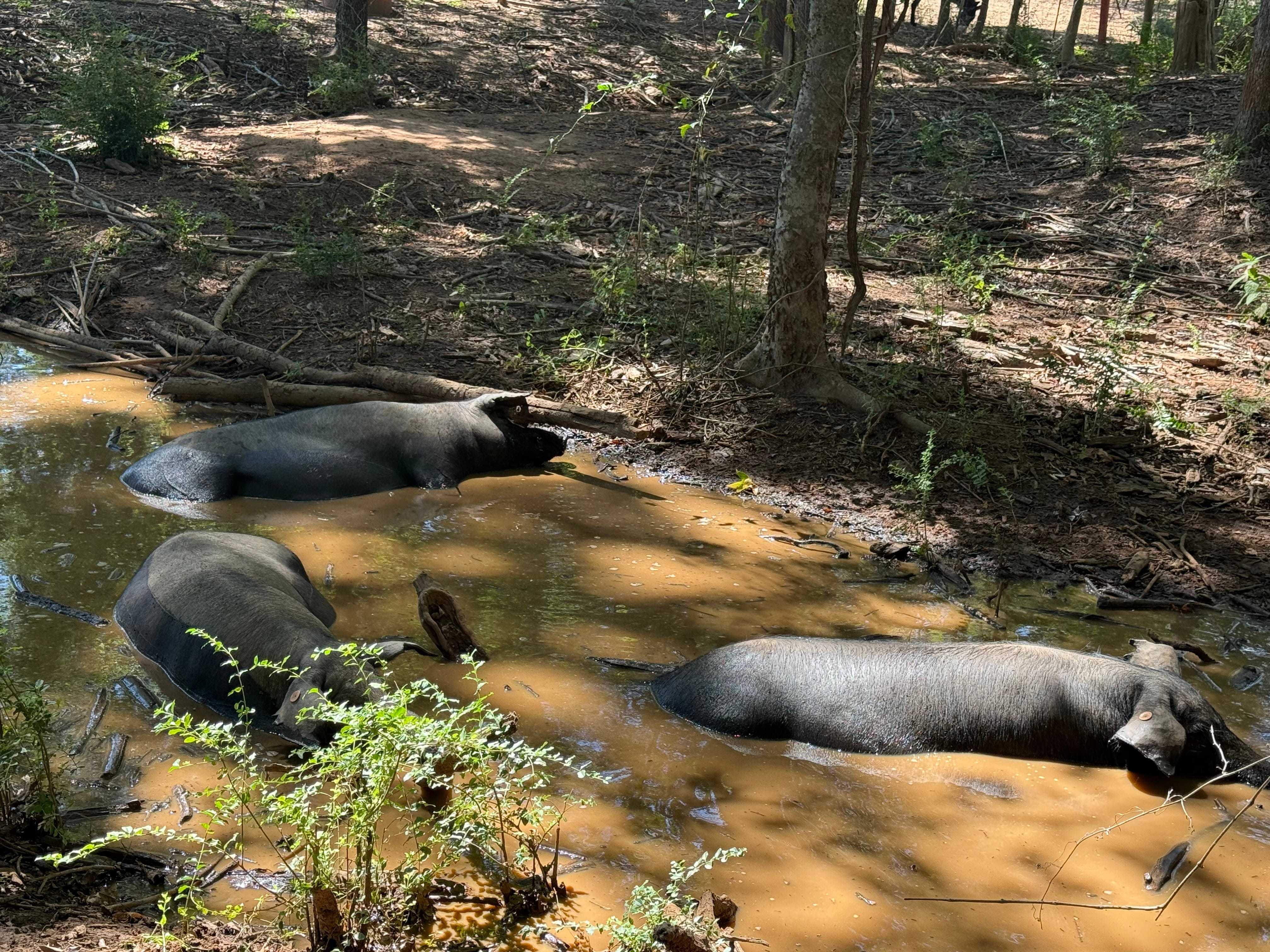
I can say without reservation that the new trailer made a difference. The individual pens gave each animal more personal space, pine shavings provided a comfortable floor beneath their feet and lounging bodies, and we kept plenty of water and feed available along the way. We carried a hose and nozzle so that we could give the pigs a bath and cool them down when the weather called for it. Livestock hauling requires attention to the animals every mile of the way, and these pigs seemed to tell us, in the only language pigs have, that they were comfortable and content. They ate, drank, slept, and arrived at their destinations ready and seemingly trusting us for whatever came next.
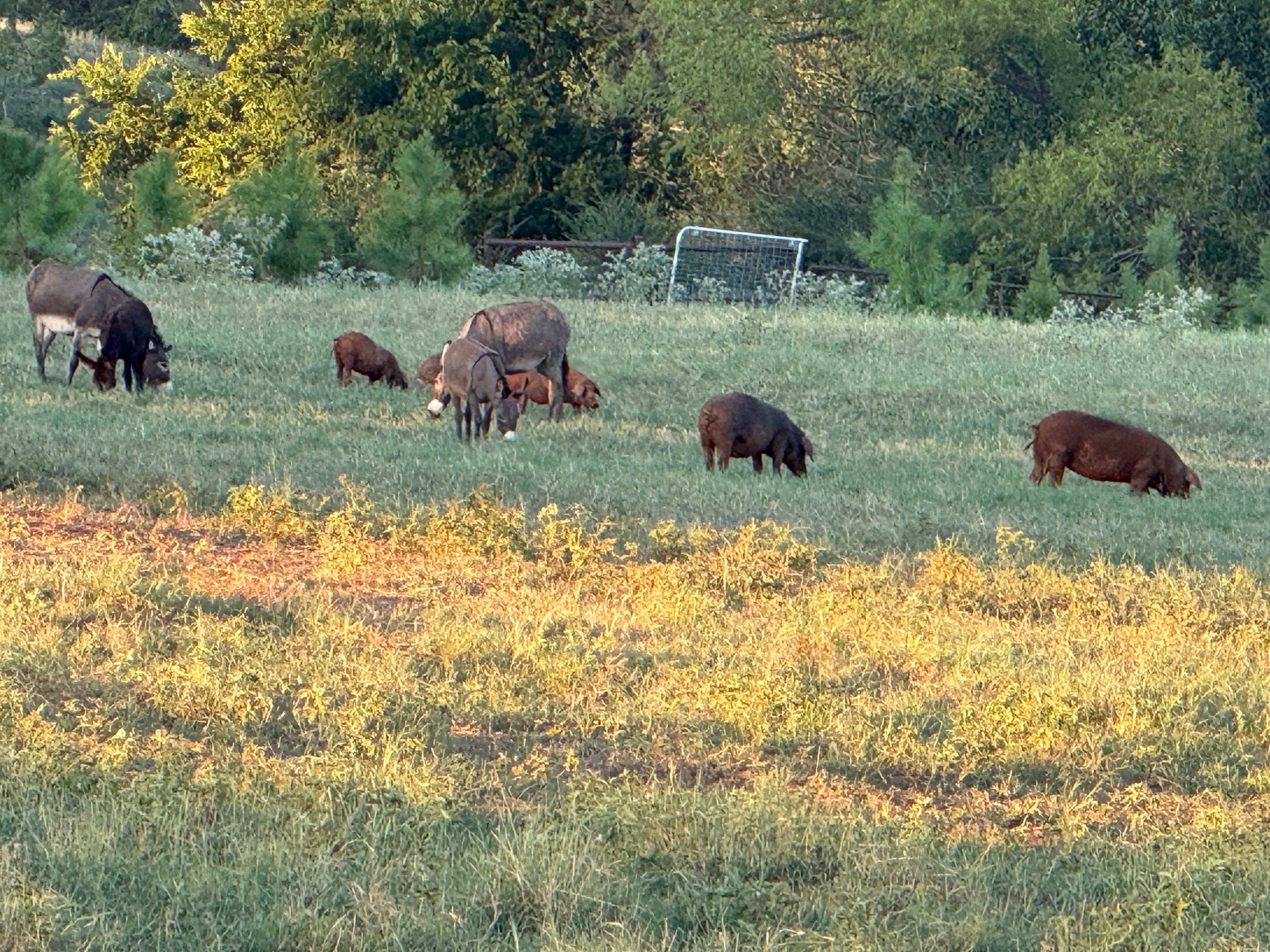
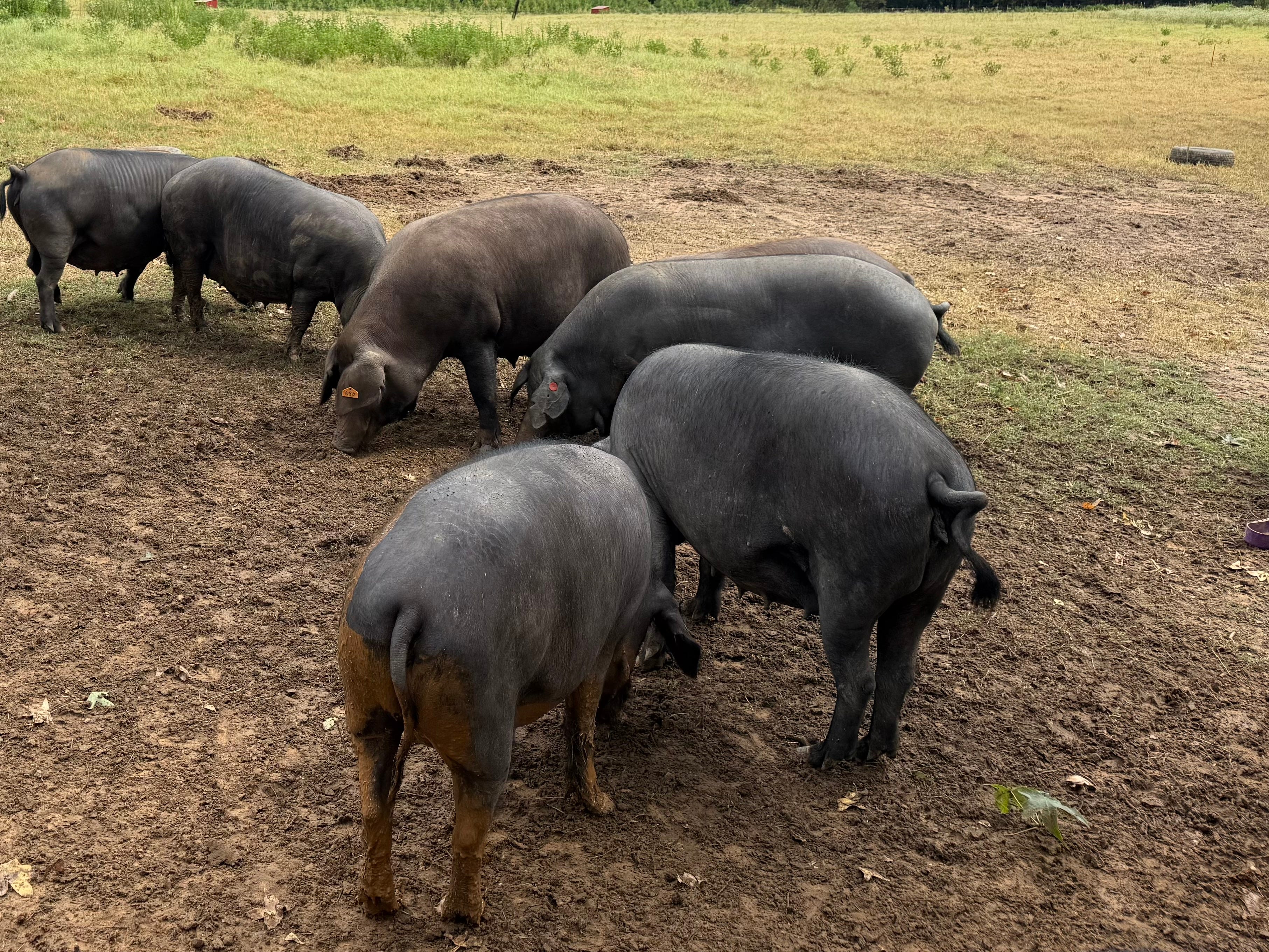
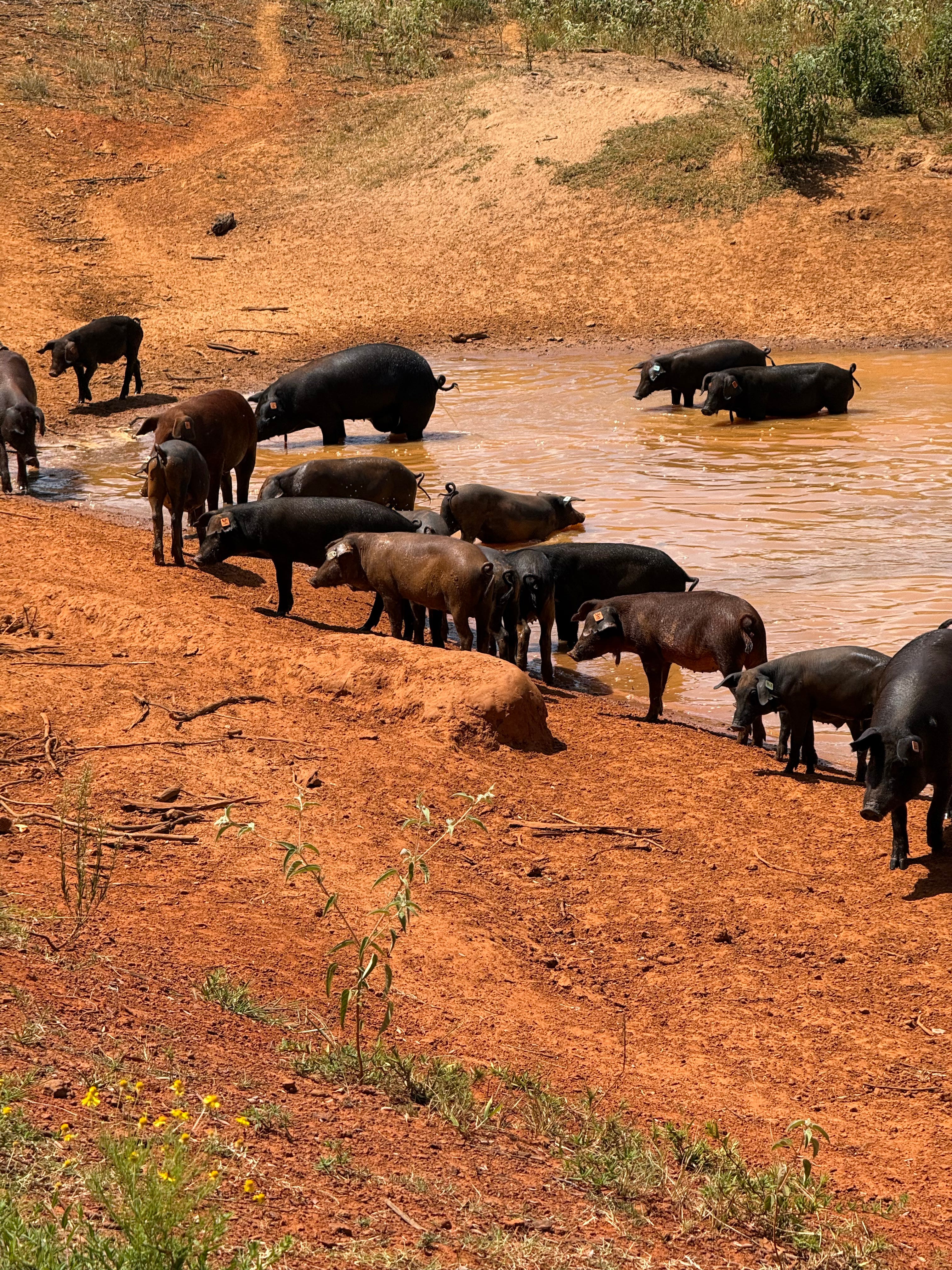
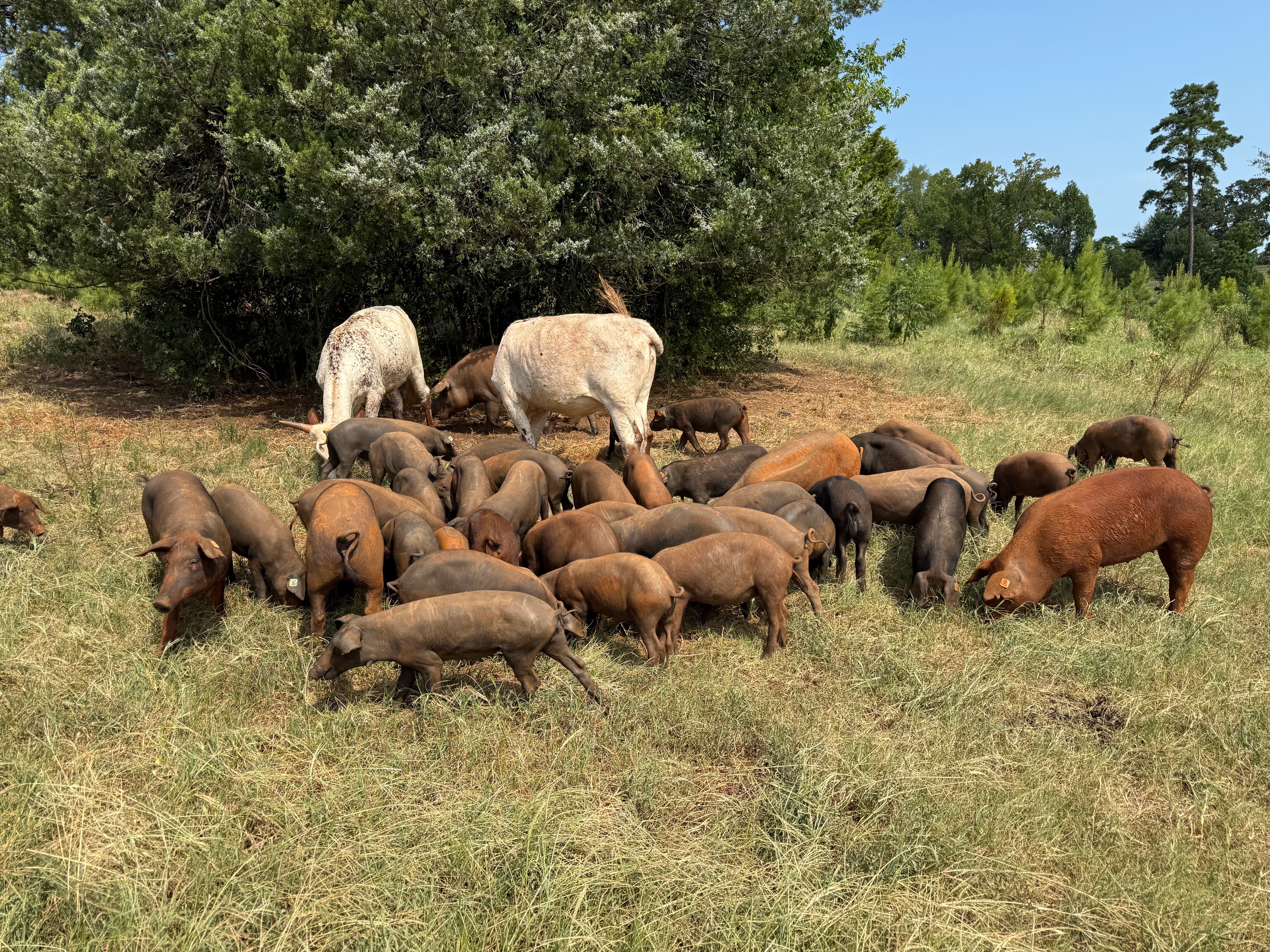
And what came next were some mighty good homes. At 84 Ranch in Pagosa Springs, Colorado, our Iberico genetics will live alongside Idaho Pasture pigs and Mangalitsa pigs, bringing another set of genetics and, we believe, another level of pork quality to an already interesting regenerative operation. In Washington State, other pigs went to a ranch where Wagyu cattle are being developed, and I can imagine those Iberico pigs eventually wandering through the pastures as naturally as if they had always belonged there. There is something satisfying about sending an animal away from the home farm knowing that it is not simply being sold but being entrusted to somebody who shares a similar vision for the land and the creatures living upon it.
The final destination was Santa Ynez, California, where six Iberico pigs found themselves in a landscape that could almost make an East Texas farmer think he had crossed the ocean. The ranch sits among mountains and vineyards, breathing air from the sea coast not far away, beneath oak trees, with a landscape that in places seems to imitate the native habitat of the Iberian pig. These are animals that evolved in the oak-dotted landscapes of the Iberian Peninsula, where they learned to forage among the trees and make use of the acorns that fall from them. It seemed fitting to me that some of the Stillwater Farm pigs should begin their next chapter in a place that bears more than a passing resemblance to the country from which their ancestors came.
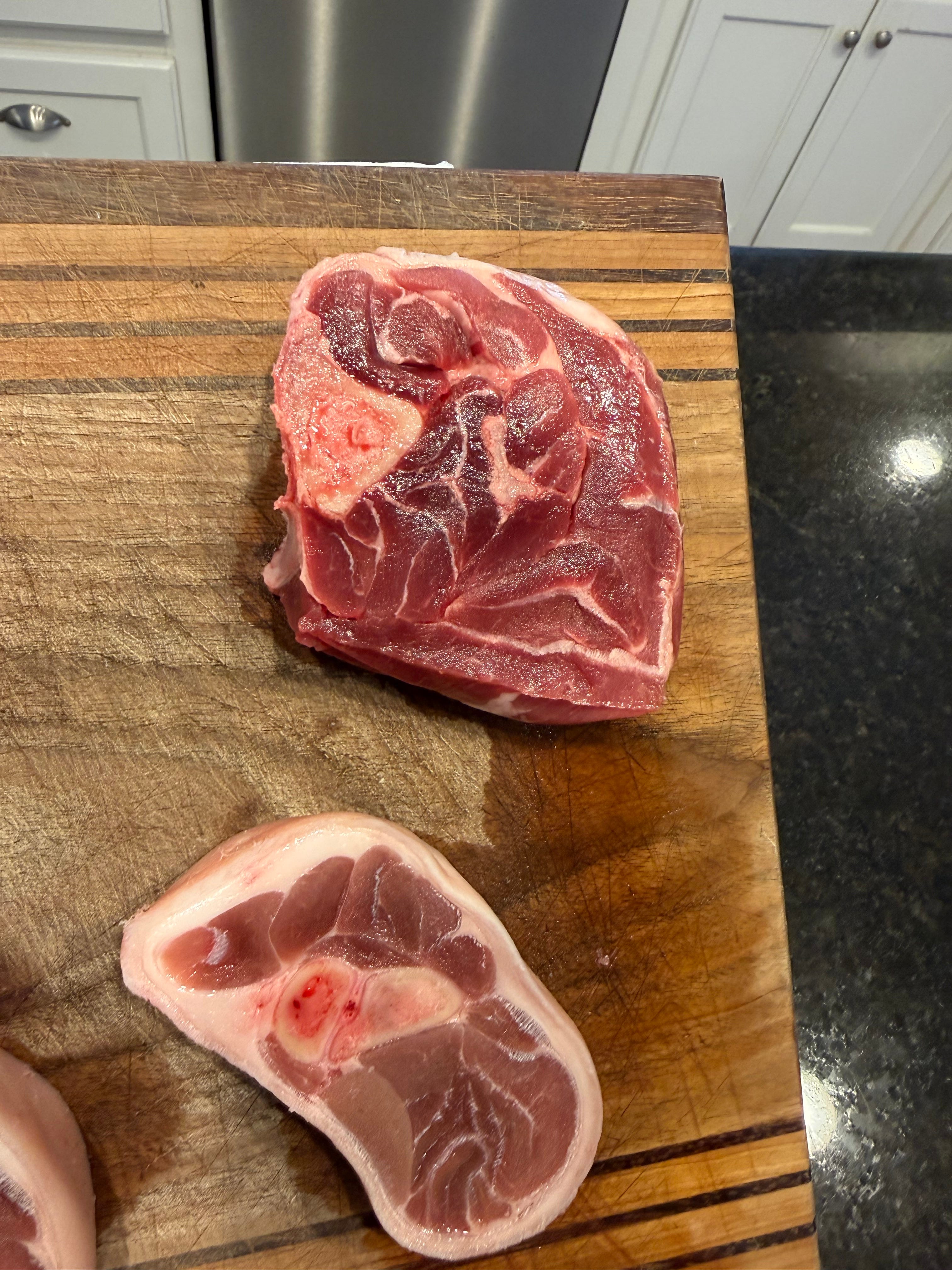
If you don’t know much about the Iberico pig, let me tell you why farmers from one end of this country to the other are seeking them out. First, there is the pork itself, with its richly marbled meat and fat that is unusually high in oleic acid, the same monounsaturated fat associated with olive oil. The Iberico is the pig behind the famous Spanish and Portuguese hams that are cured slowly and served in those beautiful, nearly transparent slices that have become one of the world’s most recognized expressions of charcuterie. Jamón is simply the Spanish word for ham, but the word carries with it centuries of tradition, place and patience.
At Stillwater Farm, we are learning that patience is not merely a virtue when it comes to Iberico hams; it is an ingredient. Our hams can cure for years, and we currently have some approaching 300 days from the smokehouse to the curing shack. That is a long time to wait for a piece of meat, particularly in a culture that has become accustomed to wanting almost everything immediately. But the farm has a different clock, and the ham has an even slower one.
I have cured commercial hams before, and I can tell you that these are different. The breed matters, the fat matters, the way the animal is raised matters, and time matters. We believe these hams can eventually reach a quality that exceeds what most people know as Appalachian-style country ham, while moving us toward the extraordinary tradition of Jamón produced on the Iberian Peninsula. We are not trying to imitate something without understanding it; we are trying to learn from an ancient tradition and see what can happen when those genetics are raised responsibly on American soil.
That is an important distinction for us at Stillwater Farm. We want to be known for the way we raise our pigs, for pasture-based husbandry and for the simple conviction that an animal under our care ought to be healthy, comfortable and allowed to behave as naturally as possible. We want to be known for the quality of the hams we produce, because good Iberico ham remains remarkably difficult to find in the United States. And we want to be counted among the conservators of this remarkable old breed.
The Iberico story in America is older than most people realize. Iberian pigs were brought to the New World during the era of Spanish exploration and colonization more than five hundred years ago, and there are historical accounts connecting Iberian-type swine with those early voyages. The modern reintroduction of Iberico genetics into the United States is much more recent, with significant efforts beginning again around 2013. What we have before us, then, is both an ancient story and a new opportunity.
That opportunity comes with responsibility. Enthusiasm for the pork cannot become an excuse to neglect the pig, and enthusiasm for the breed cannot become an excuse to lose the breed. We want Iberico to thrive in America as a purebred animal, but we also believe there is tremendous potential in thoughtful crosses with some of our country’s excellent heritage breeds. Some of us who care for Iberico pigs are aspiring to create a new crossbreed called Iberian Grazers. For Texans the Iberian Grazer might resemble the formation of the Santa Gertrudus cattle breed, which was the first American breed established in 1920 by crossing the Brahman and Shorthorn. There is room for innovation, but innovation should not require forgetting where an animal came from.
That is why we are increasingly serious about responsible breeding. If farmers across this country are going to invest in Iberico genetics, they deserve to know what they are buying. They deserve breeding stock with identifiable lineage, carefully maintained genetics and the confidence that the animals being represented as Iberico are what they are claimed to be. Conservation requires more than enthusiasm; it requires records, cooperation, transparency and people willing to think beyond their own herd.
So why would two men pull a trailer more than 3,000 miles to deliver pigs? Yes, there was good income in the pigs and in the delivery, and a farmer would be foolish to pretend that income is irrelevant. Farms cannot operate on good intentions alone. But the money was never the most important reason for the trip. The real value was in the relationships. We were building a network.
We were listening to farmers who are beginning their own Iberico journeys. We were seeing how the animals fit different landscapes and different regenerative systems. We were talking about genetics, pasture, meat quality, breeding, hams, markets and the future. And everywhere we went, we found people who were not simply interested in producing pork but were interested in husbandry—the old-fashioned idea that how you care for an animal matters as much as what you eventually get from it.
That is why one of the most encouraging encounters of the entire journey was our conversation with Tom Lowe. Tom has been an Iberico enthusiast for many years and was involved in bringing some of the early Iberico, including Alentejano, genetics from Portugal into the United States. He has watched the breed’s American story from a perspective that few people possess, having seen both the possibilities and the disappointments firsthand.
Scott and I talked with Tom about the ups and downs of Iberico in America, and by the time we finished our conversation we were encouraged by how much we agreed upon. First, there needs to be a conservancy for the breed, something serious enough to preserve genetics that could otherwise disappear. Second, Iberico can contribute to the American pork industry both as a purebred, particularly for exceptional ham production, and through thoughtful crosses with other heritage swine that can produce richly red, finely marbled and naturally flavored pork. But perhaps most importantly, we talked about collaboration.
There is a temptation in any agricultural enterprise to build a “silo” around yourself and view the farmer down the road primarily as a competitor. That may work for some businesses, but I don’t think it is the best way to build something as unusual and promising as Iberico in America. If we are serious about establishing the Wagyu of Pork in this country, we need breeders who are willing to cooperate, share knowledge, protect genetics, establish standards and celebrate one another’s successes. Tom looked at us and said, “Count me in.”
Those three words meant more to me than he probably realized. We had driven all the way from East Texas to the West Coast, but sitting there with somebody who had seen the Iberico story unfold in America from its earlier chapters, I felt that the road had brought us exactly where we needed to be. We left the Phoenix area and turned east toward home encouraged, inspired and reminded once again that agriculture is not ultimately about isolation.
It is about relationship. The best farms are not islands. They are connected to other farms, other farmers, other animals, other generations and the soil and water that sustain them all. A pig can leave Stillwater Farm and become part of a herd in Colorado. Another can travel to Washington. Another can find an oak-studded pasture in California. The genetics travel, but so do the relationships, the knowledge and the responsibility.
That is what the journey taught me. The three thousand miles were not merely miles between Chandler and Santa Ynez. They were miles between people who had not yet met, ideas that had not yet been shared and dreams that had not yet found one another. The trailer carried pigs, but the truck carried something larger: the possibility that a group of farmers scattered across this country might become something more than individual breeders trying to make a living.
Perhaps we can become stewards of a breed. Perhaps we can become collaborators in a new American expression of an ancient animal. Maybe we can build the Iberico Americano Pig Association not merely as an organization but as a community of people who understand that what we are building will be stronger if we build it together.
And that, in the end, is why the trip was worth it. It was never just about selling pigs. It was about finding people who care about the same things we care about—the land, the animals, the food, the genetics, the future and the possibility that good agriculture can still be practiced with both skill and soul.
RX: Don’t go it alone. Find the people who share your deepest commitments, listen to their stories, learn from their mistakes, celebrate their successes and be willing to share what you have learned along the way.
A Prayer for the Road, the Farm and the People We Meet Along the Way
Gracious God, we give you thanks for the road that carries us beyond the boundaries we know and introduces us to people we would never have met otherwise. We thank you for the animals entrusted to our care, for the ancient wisdom carried in their bloodlines, for the soil that receives their feet, the grass that feeds them and the people who give their lives to caring for the land.
Teach us to be faithful stewards rather than careless owners, patient cultivators rather than impatient consumers, and generous collaborators rather than fearful competitors. Bless the farmers we met along this long road, bless the animals now living in their new homes, and bless the work of preserving and improving the Iberico breed in America.
Give us wisdom to conserve what is precious, courage to try what is new, humility to learn from those who came before us and generosity to share what we discover with those who come after us. And when the road is long and the work is hard, remind us that we are not traveling alone. Amen.