
A FARMACIST'S PRESCRIPTION~THE GIFT OF LITTLE #63
My daughter said that this one should come with a WARNING label. She’s usually right. Usually the prescription is the last word but in this article, it is the first word in this one with the hope that it causes the reader to ponder where our food really comes from. #buy local #eat local #know your farmer
RX: Read this and look at the photos of life and death and not say “ewww” and just turn away, realize that our food does not come in plastic and styrofoam package. It is a real animal that brings more joy than we often claim, and experiences good beyond our understanding. The pork we eat was a sacrifice before it was meal. Give thanks for the animals that make our tables centerpieces for special times, bringing sustenance and sometime celebration.
It was a shock this morning to find little number 63 lying lifeless beneath the weight of a fallen gate. Sometime during the night, she and a small band of recently weaned piglets, with numbers but not yet names, found a way through the nursery pen and made their way back toward their mothers. Whether it was homesickness or simple determination, they were intent on crossing boundaries that had been set for them. In their eagerness, they pushed against a gate until its hinges gave way. The gate fell. The others escaped. Little #63 did not.
A few days ago this little 40 lb. pig was part of bringing delight to cousins from New York and Atlanta as they fed and petted #63 and her siblings and friends.
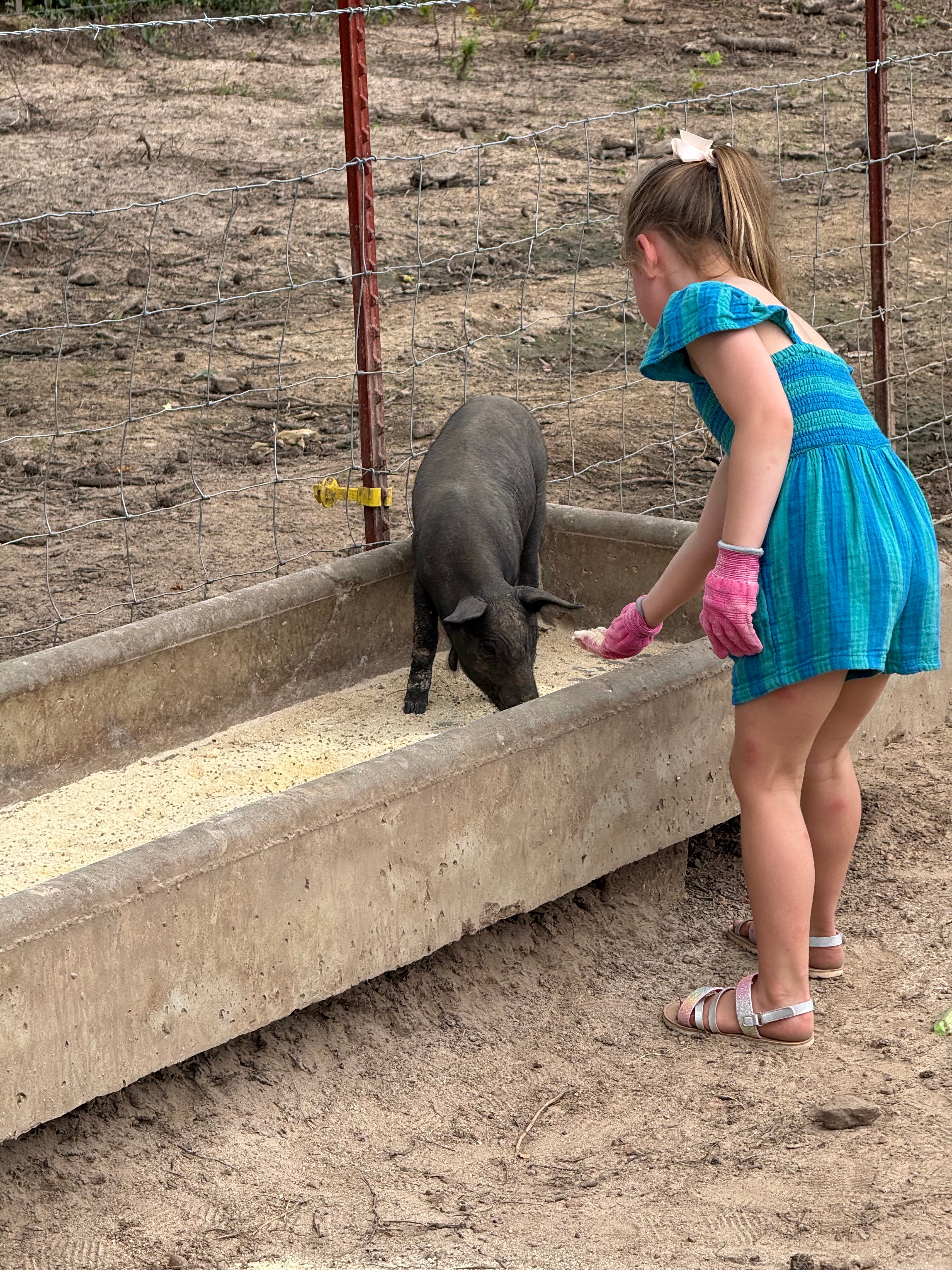
Just yesterday we had placed an ear tag in her ear and notched her ears so we could identify her, and her lineage and follow the progress this little girl would make. Looking at her still body this morning, all that careful record keeping seemed a futile exercise. We had made plans for her future, but her future had already come to an end.
Standing there in the quiet of the morning, I was reminded once again that farming is an exercise in humility. We make our plans, build our fences, tend our animals, and imagine tomorrow. Yet the farm has a way of teaching us that tomorrow is never guaranteed—not for the farmer and not for the livestock entrusted to our care. When I lifted the gate from her body, it was clear she had not been gone long. My mind immediately turned from tragedy to stewardship. If her life had ended, perhaps her death need not be wasted.
Last year, while visiting the Wendell Berry Center in Port Royal, Kentucky, I picked up a little book entitled, For the Hog Killing, 1979 with photography by Tanya Amyx Berry. It’s simple poem and the photos bring it to life with the sort of practical wisdom that rural people once passed from one generation to the next and Wendell was witnessing to what he had taken part in many times. He talked about the importance of looking a hog directly in the eyes before a well placed bullet would down the animal for the work of carefully preparing its body as meat into pork for family and neighbors alike. The importance was for the shooter to realize the magnitude of taking a life for food. Let that sink in. This morning, I found myself remembering its pages.
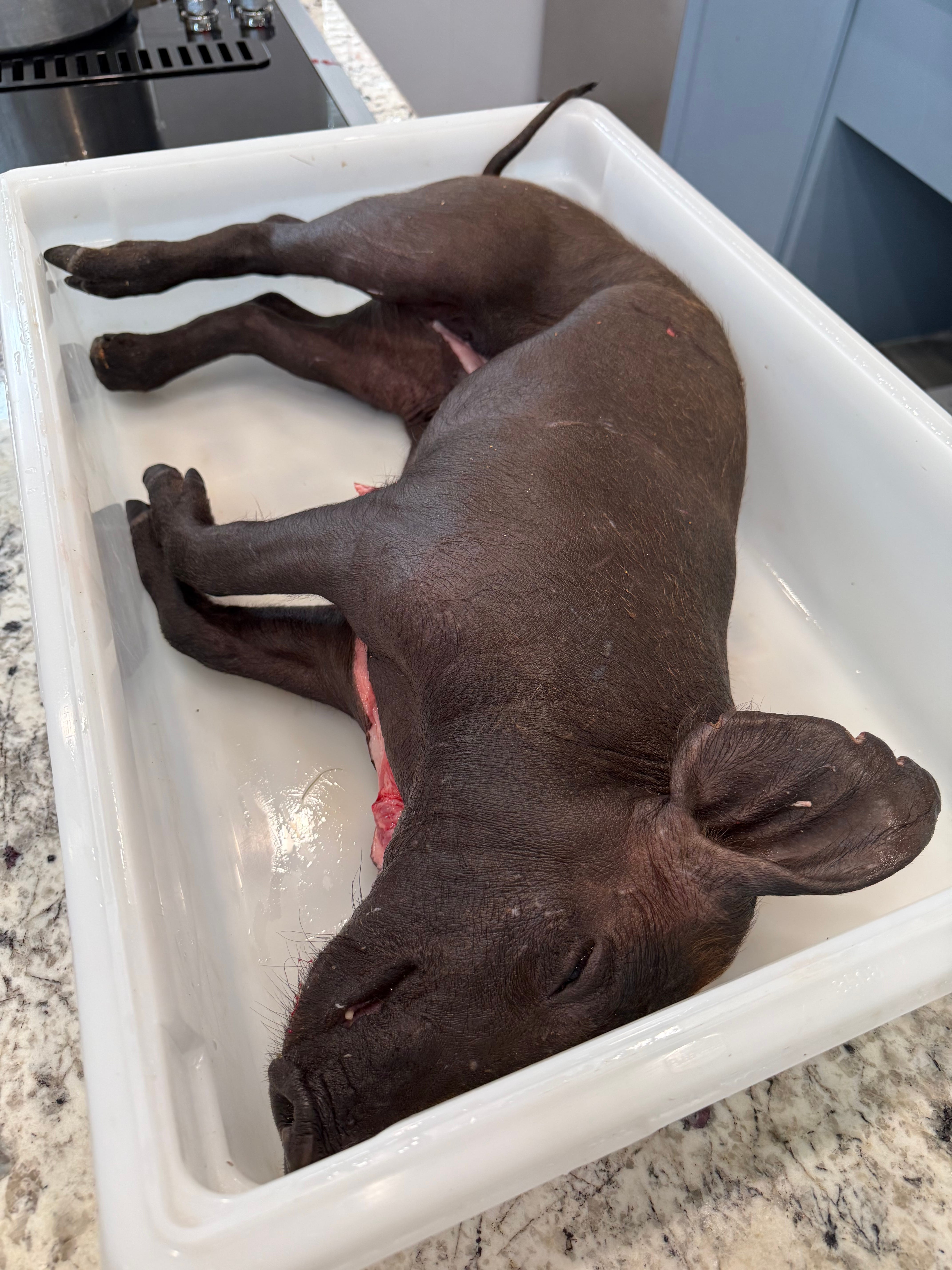
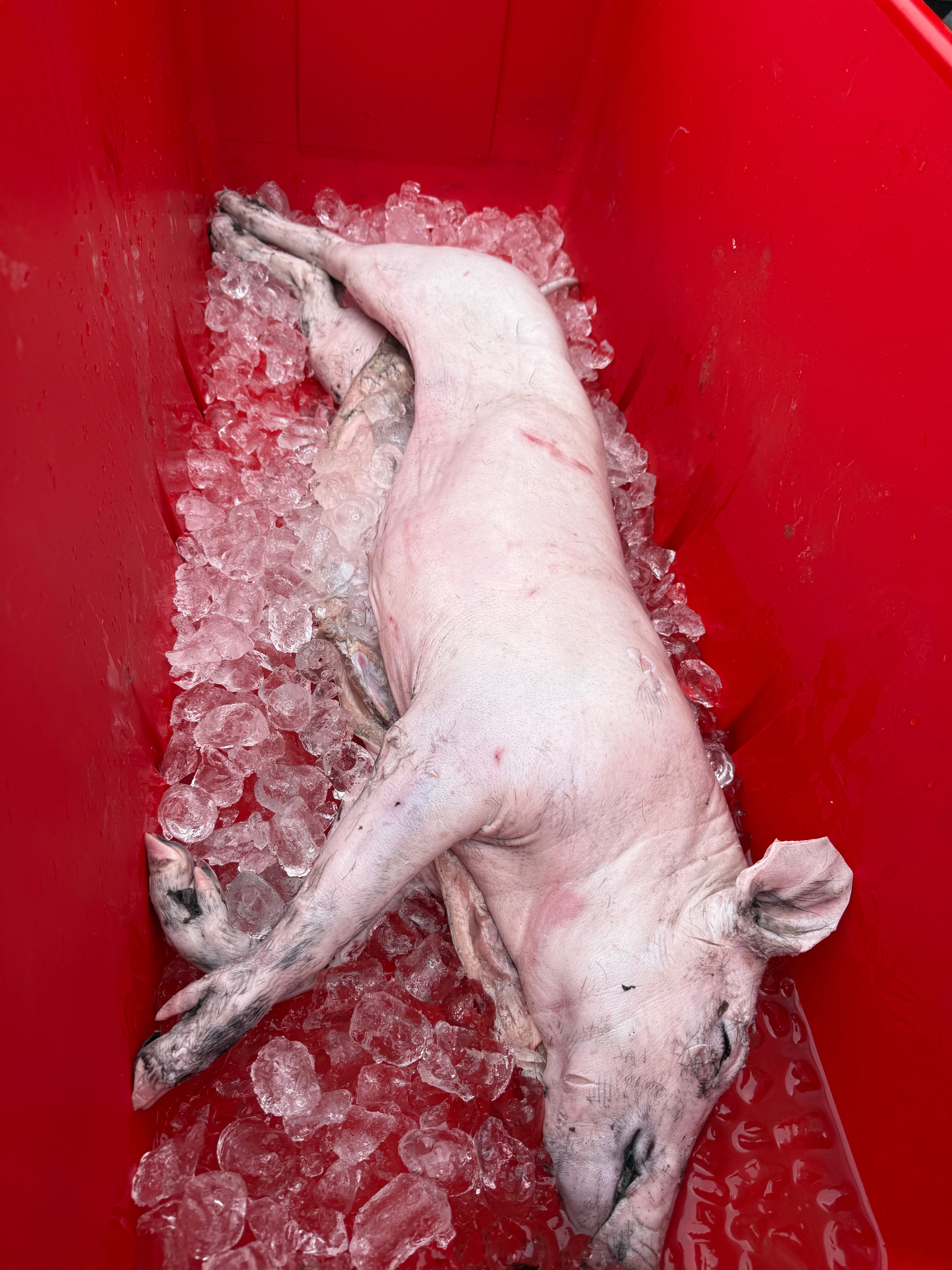
Today, I could skip the first part the eyes were already set by death. With a very sharp knife I carefully processed little #63 and washed her body with cool, clear water as we do often when they are eating just to cool them off. They, she loved it in life, it seemed right in death. Then I heated a large pot of water to between 145 and 150 degrees Fahrenheit. When the temperature was right, I lowered her into the water, completely immersing her for six minutes. The hot water loosened the hair from her hide. When I lifted her out and laid her in a clean white tub, I began scraping her hide with a special scraper. Slowly, the dark hair gave way, revealing a smooth, pale hide beneath. From snout to tail she emerged transformed, prepared for what would come next, which would be a chilling before the low heat of the smoker would render her tender and delicious
Now little #63 is destined to make a patriotic
holiday meal a delicious and memorable event. We will gather around the table with gratitude for the gift of pork harvested from her life. We would only be fooling ourselves if we pretended that many of our Iberico pigs at Stillwater Farm are not destined for a supper table. That is part of the covenant between livestock and farmer. But somewhere along the way, many of us have forgotten that covenant. We buy meat wrapped in plastic, sealed in styrofoam trays, disconnected from the living creature that made the meal possible. We seldom consider the life behind the package. Too often, the animal remains invisible.
Many commercial hogs spend their lives on concrete floors, raised in confinement, fed precisely formulated rations and routine medications, all designed to produce a uniform animal at a predictable weight on a predetermined day. There is efficiency in that system, but there is little room for wonder. It’s enough to cause understaning of the convictions of a Vegan or a vegetarian. But we are Omnivores and created to enjoy herb and meat alike. I believe meat should be enjoyed first as an animal created by God and cared for by me and those on our farm.
Our pigs live differently. They run and root and romp to their hearts’ content. They graze pastures planted with their taste and delight in mind. They forage through the woods, nose beneath oak and pecan trees, discovering hard cased treasures hidden in the soil. They know sunshine and rain, shade and fresh air. They live as pigs were created to live. They live good lives, and I believe happy lives.
But good lives are not lives free from tragedy. Sometimes a gate falls. Sometimes an accident happens. Sometimes a farmer stands in the dawn light grieving the loss of a piglet he tagged only the day before. Yet even in loss there can be gratitude. Gratitude that the animal lived well. Gratitude that the life of little #63 will nourish others. Gratitude that on a small farm, death is not hidden away but acknowledged with respect.
Wendell Berry once wrote that eating is an agricultural act. I suspect he would also say that gratitude is a sacred responsibililty. So when we sit down to enjoy the meal that little #63 will provide, we will do so with thankful hearts. We will remember that her life mattered before it became our food. We will honor the gift. We will say grace. And in doing so, we may recover something modern life too often asks us to forget—that every meal is a miracle purchased by the sacrifice of something beyond ourselves. It is our goal on the Stillwater Farm for our animals to have but one bad moment, but even that moment transforms a single life into much more to be thankful for.
Gracious Creator and Giver of all Life,
For this food before us, we give You thanks.
For the soil that grew the grass,
for the rain that watered it,
for the sun that warmed it,
and for the hands that cared for it,
we are grateful.
Today we remember with gratitude the life of the animal whose sacrifice nourishes us. We acknowledge that this meal did not come without cost. Help us never to take lightly the gift of life that sustains our own.
We thank You for little # 63, for the days she rooted and ran upon this farm, and for the nourishment she will soon provides. May her life remind us that all creation is connected, and that every good gift ultimately comes from You.
Teach us to receive this meal with humble hearts, to waste nothing, to share generously, and to live gratefully. Bless this food to our bodies, this fellowship to our souls, and this farm to Your glory.
In the name of Jesus Christ, who gave His life that we might have life abundantly.
Amen.